The collection · 08
Vintage oyster plates: shapes, marks and French makers
A Limoges oyster plate turns a simple serving shape into a decorative object. Lo Cantou explores Limoges oyster plates and French faience designs through their sculpted wells, marks and condition.
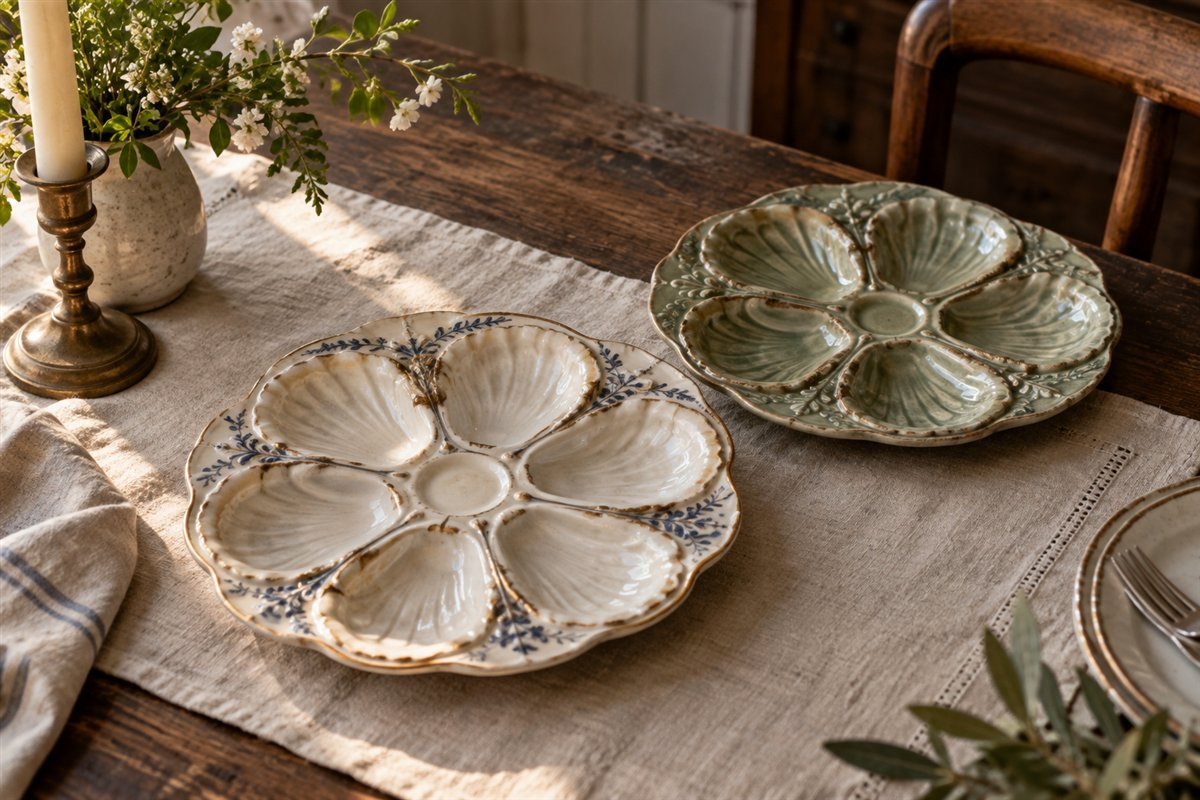
Limoges oyster plate marks & porcelain details
A Limoges oyster plate needs a more precise description than the place name alone. Limoges refers to a porcelain-making region, so inspect complete factory and decorator marks when comparing Limoges oyster plates.
Look for the complete factory and decorator marks on the reverse. Compare the mold, decoration and dimensions with documented examples. Gold wear, small rim chips and restoration need separate photographs. When an attribution is only approximate, its wording should make that clear.
Vintage oyster plates in French faience
Vintage oyster plates in French faience offer expressive color and modeled surfaces. A plate attributed to Sarreguemines or Longwy should be supported by its marks and documented comparisons.
Check the raised dividers, well edges and underside for damage. Similar shapes can appear in different factories or periods; a decorative style alone is not a maker’s signature. Complete photographs and an honest condition report matter more than a confident-sounding label.
What to check before choosing oyster plates
Compare the number of wells, diameter and complete marks. Ask for close-ups of raised dividers, gold wear, rim chips and repairs before comparing two apparently similar plates.
Explore our approach to provenance, then read how Lo Cantou plans packing and delivery to the US.
Further reading: The porcelain heritage of Limoges.
Oyster plates: buying & care questions
Why do oyster plates have compartments?
The shaped wells organize individual oysters around the plate, often with a central space for an accompaniment. The number and form of the wells vary from one design to another.
How can I tell Limoges porcelain from French faience?
Begin with the material and complete maker’s marks, then compare the shape and decoration with a documented reference. Do not use a color or a single decorative detail as proof of a factory attribution.
What is a Limoges oyster plate worth?
Maker, pattern, age, condition and restoration all affect value. Compare documented sold examples where available, rather than treating asking prices as evidence of a sale. An image alone rarely supports a precise valuation.
Follow your curiosity
Keep exploring.
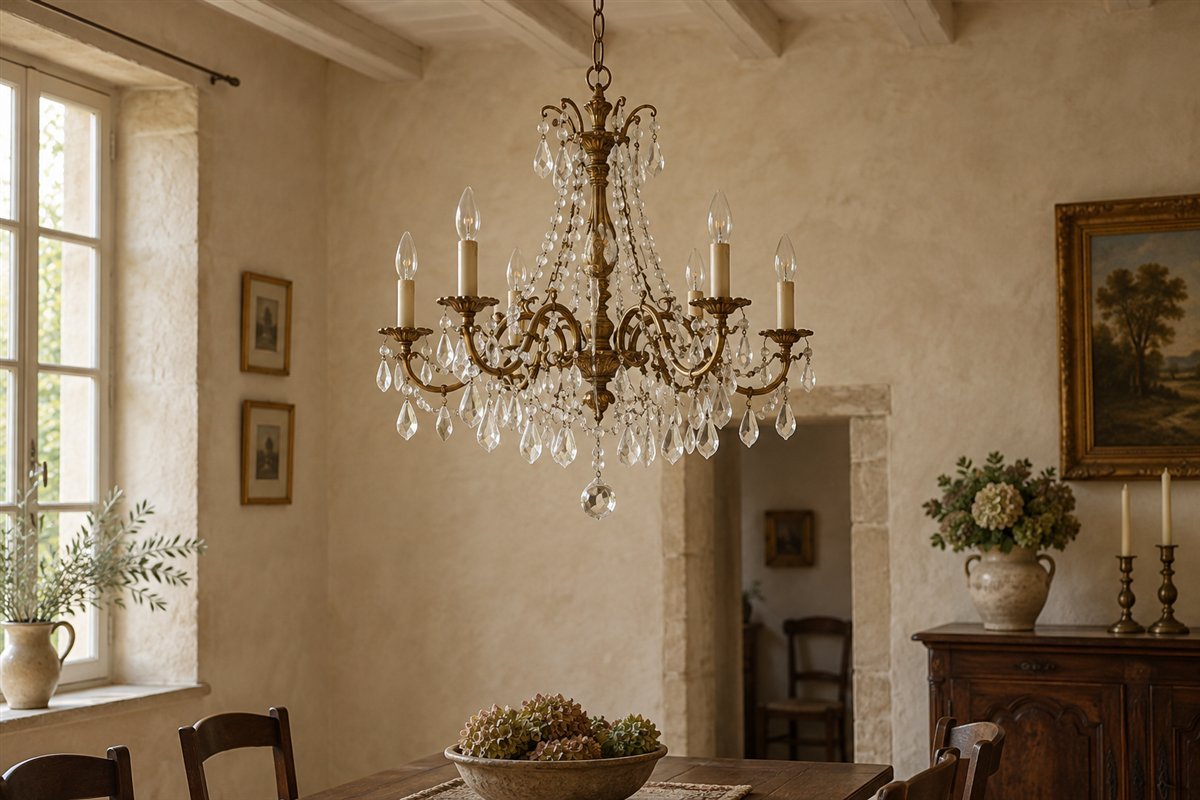
Lighting
Chandeliers, sconces & lanterns
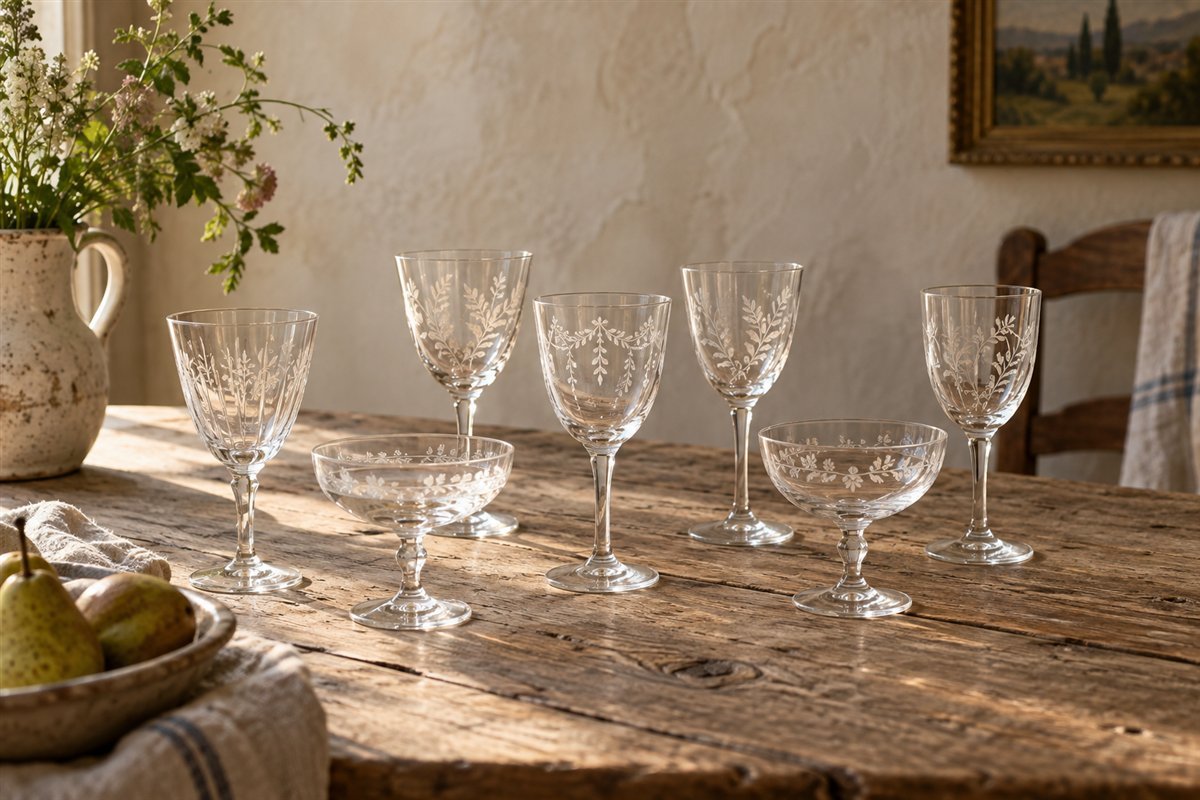
Glassware
Etched glasses, coupes & carafes
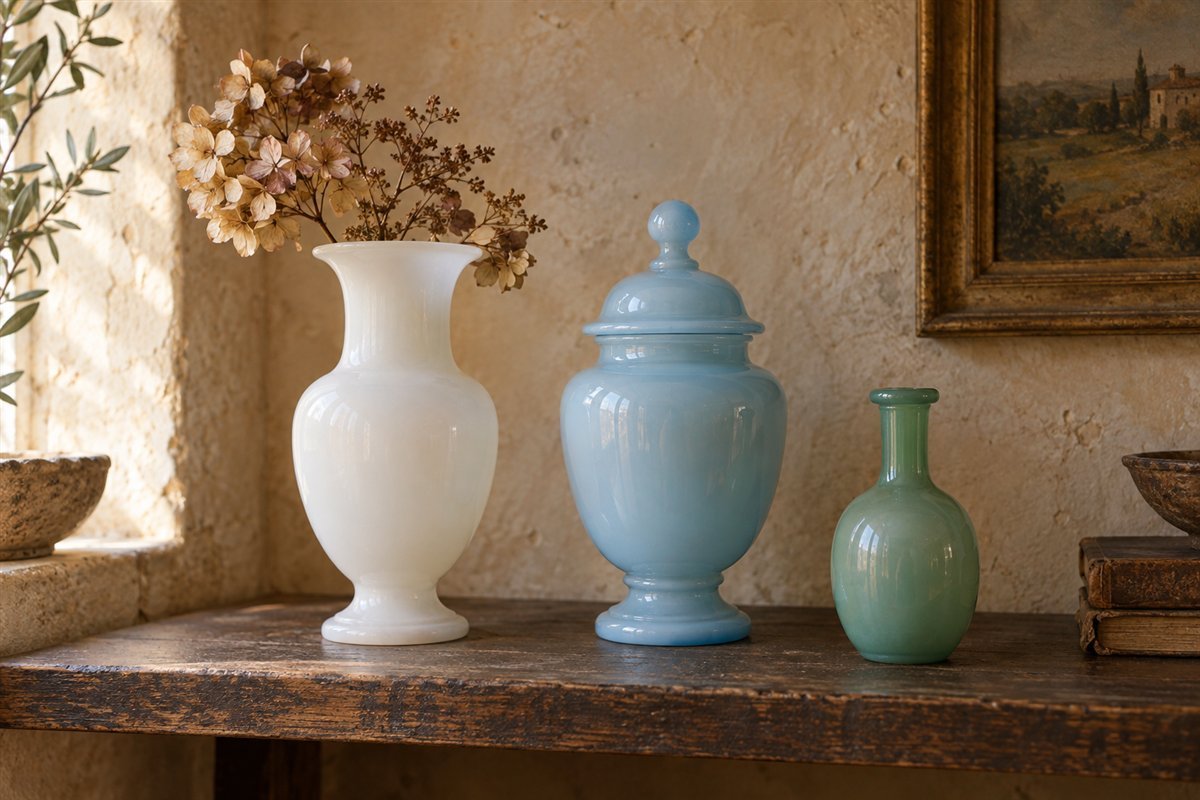
Opaline & jars
Opaline, confit pots & stoneware
AI-created collection illustrations.
Selection notes
Limoges oyster plate: identify the complete mark
Limoges is a place associated with multiple makers and decorators. Photograph all backstamps and inscriptions, then compare the form and decoration with documentary references. A place name alone does not identify a single factory or date.
Haviland Limoges oyster plates: compare each piece
Record factory and decorator marks where present, the number of wells and the plate diameter. Ask about gilding wear, chipped dividers, repairs and replacements within a set. A shared pattern description does not guarantee identical production or condition.