AI-created editorial illustration · Not an item offered for sale.
Reading a Limoges oyster plate
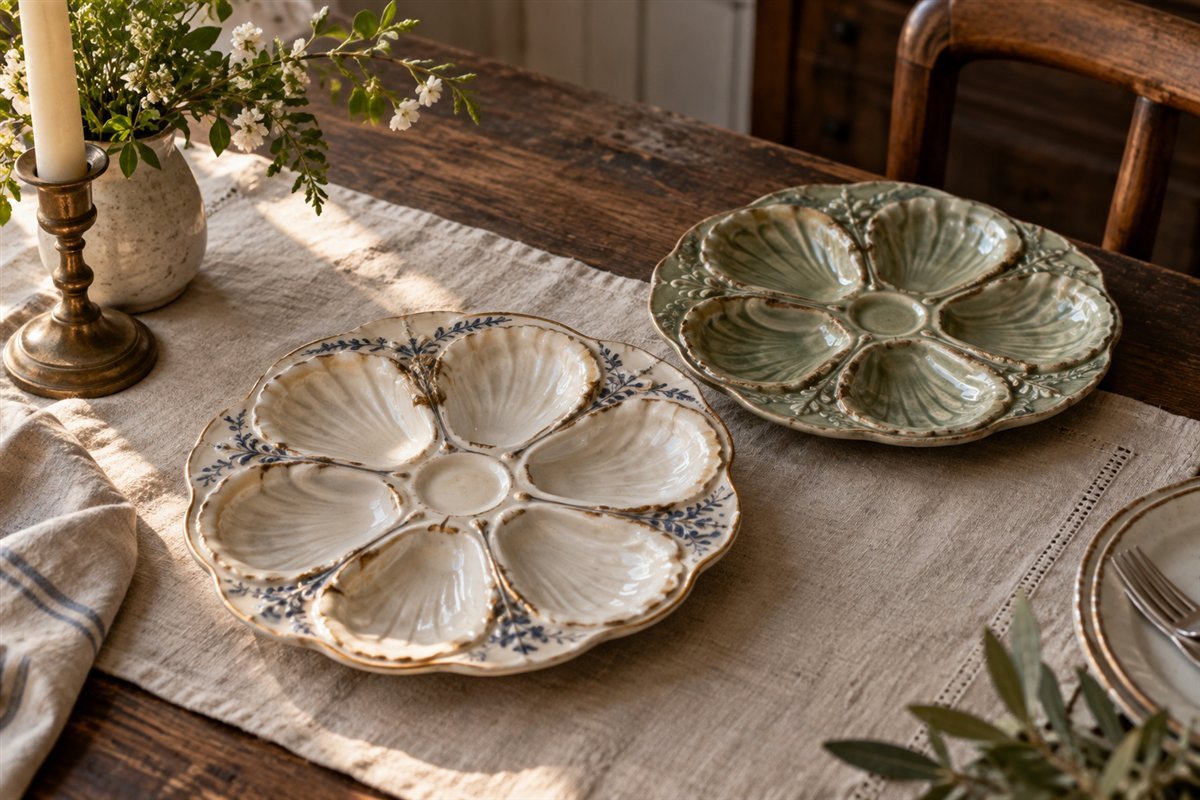
Start with the reverse. Photograph every factory or decorator mark, including any numbers or impressed symbols. Limoges names a porcelain-making region rather than one maker; the full combination of marks matters.
Then look at the whole object: the mold, well count, rim, decoration and dimensions. Ask for a written condition report and close-ups of any repairs. A partial mark or attractive pattern may support further research, but neither guarantees a precise date.
AI-created editorial illustration · Not an item offered for sale.
Identifying Christofle silverplate marks
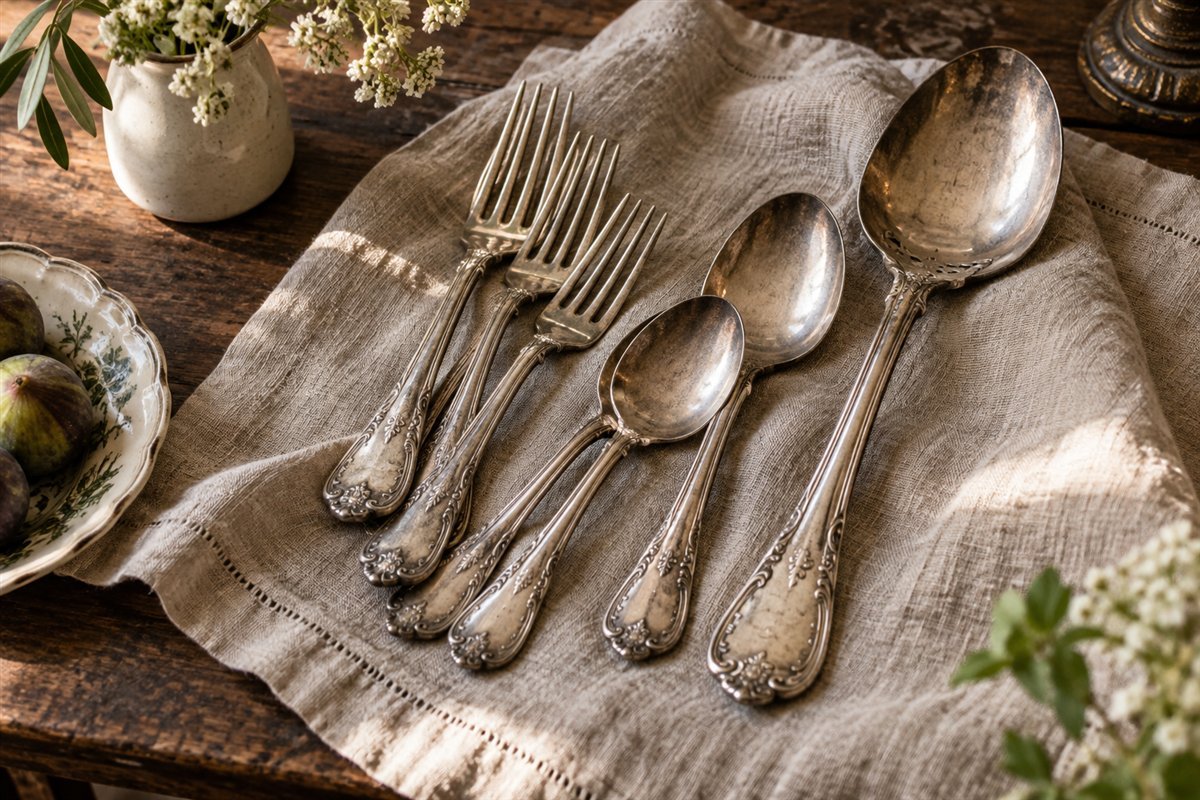
Use a clear, close photograph of the complete mark. Christofle publishes a hallmark archive that provides a firmer starting point than resemblance to a familiar pattern. Compare the mark itself, rather than just a brand name in a listing.
Photograph the entire piece and any additional numbers. Consider the form, construction and wear alongside the mark. On a mixed set, check more than one item: replacement pieces may carry different marks. A worn stamp can leave the period uncertain.
AI-created editorial illustration · Not an item offered for sale.
Looking closely at French faience
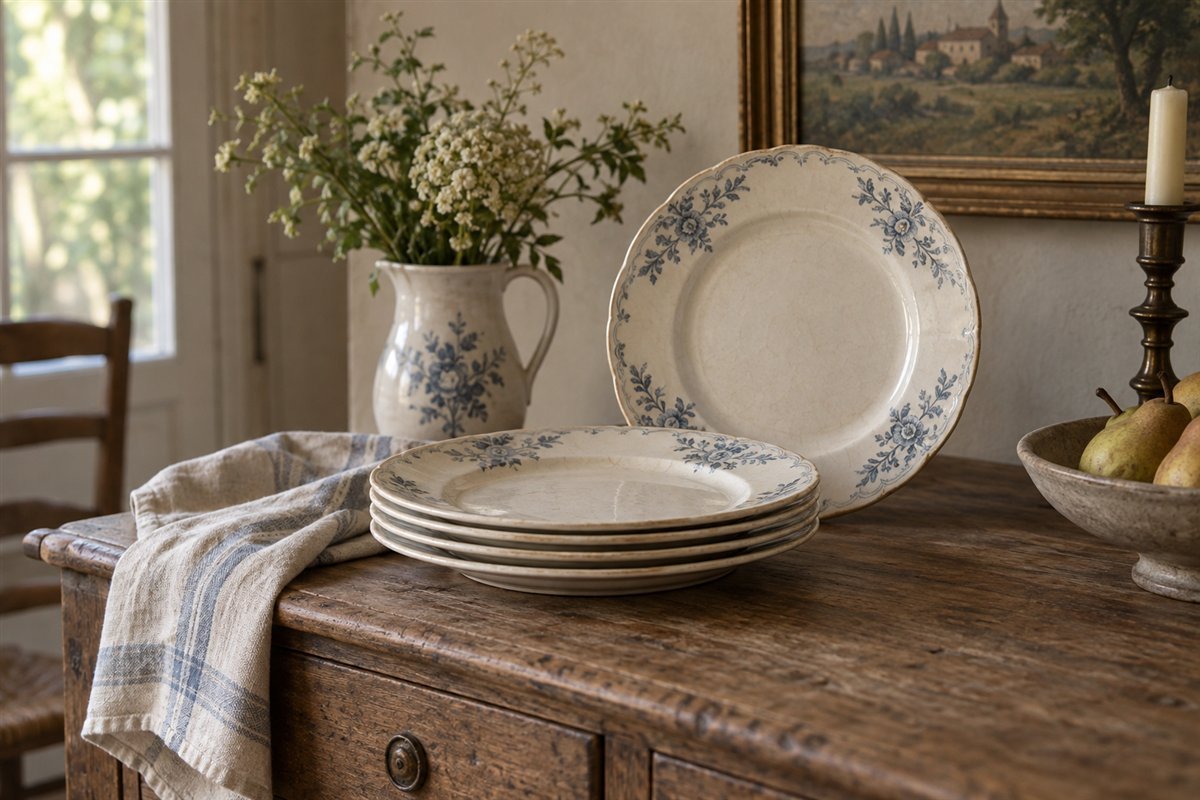
A French-looking pattern is a design choice, not proof of origin. Ask for the maker’s mark, material, dimensions and evidence behind the date. Photographs of the reverse are just as useful as a carefully styled front view.
Compare the decoration and construction with a documented maker reference. Condition also needs its own account: crazing, stains, repairs and chips are different findings. Modern care guidance applies to the products it names; it should not automatically be extended to an unidentified antique.
AI-created editorial illustration · Not an item offered for sale.
Vintage champagne glass: coupe or flute?
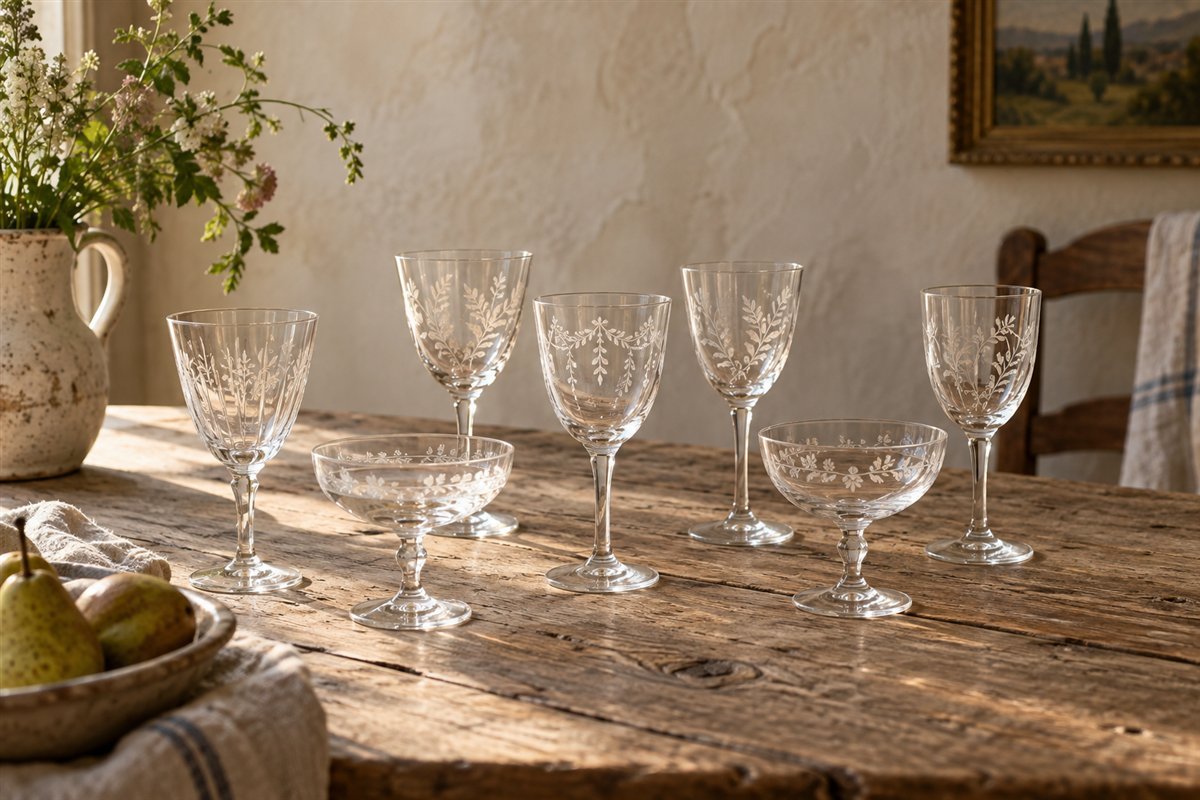
Choose the glass you enjoy using. A shallow coupe and a narrow flute create very different silhouettes, but neither shape is a reliable shortcut to the age of a particular glass.
Compare height and capacity when assembling a set, and ask for close-ups of the rims and bases. If you are mixing glasses, repeat one feature — height, color or etched detail — to give the table some continuity. Let the individual glass’s documentation support any vintage attribution.
Is a coupe always vintage?
No. Both coupes and flutes are produced today.
What should I compare in a mixed set?
Height, capacity, bowl shape and rim condition.
Can different patterns work together?
Yes. Repeating a color, height or etched detail can give a mixed table a coherent feel.
AI-created editorial illustration · Not an item offered for sale.
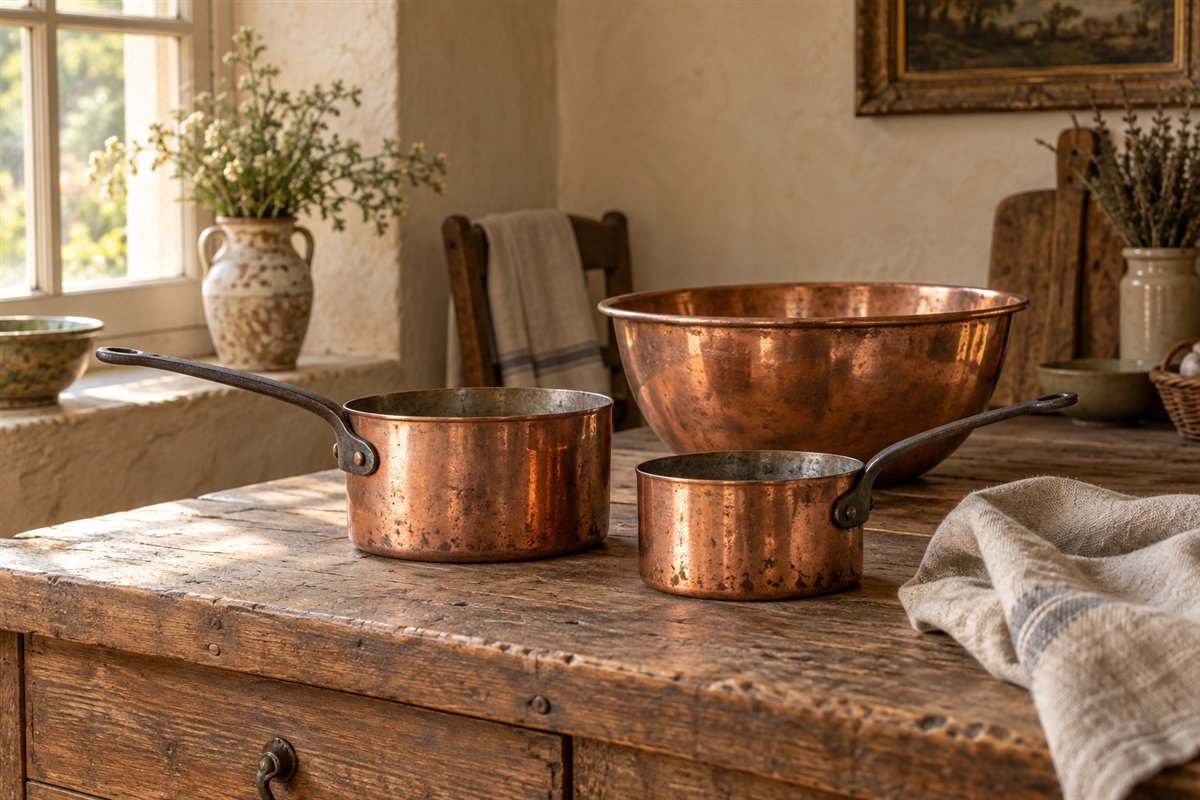
French copper cookware: checks before cooking
Inspect the inside first. Ask what the lining is, what wear is present and whether the vessel has been assessed for cooking. A beautiful exterior cannot tell you whether a vintage pan is suitable for food.
Mauviel explains that tin-lined copper can need retinning during its life. For a vintage pan with uncertain condition, ask a specialist to assess the lining and any repairs. Keep it for display until its intended use is established.
AI-created editorial illustration · Not an item offered for sale.
Silver plated flatware: what is a French ménagère?
A ménagère is a coordinated cutlery set, often presented in a fitted box. Its contents are not standardized: two sets with the same total number of pieces may serve very different needs.
Ask for a count of forks, spoons, knives and serving pieces, with dimensions for each type. Compare marks across the set and check wear on contact surfaces. A useful set is the one that fits your table, even if it is smaller than the grandest box.
AI-created editorial illustration · Not an item offered for sale.
French kitchenware: a kitchen with character
Start with a few things you like looking at every day: a substantial jug, a stack of plates, a copper form that catches the afternoon light. Leave space around them so each object can be seen.
Repeat a material or a quiet color, then add one contrast. Place heavier pieces on a secure lower shelf, and keep the objects you use most within easy reach. A collected kitchen can grow gradually; it does not need to arrive as a matching set.
Do all the pieces need to match?
No. Repeat a material or a color to give varied pieces some continuity.
Where should heavier objects go?
On a suitably secure lower shelf or another surface rated for their weight.
How many pieces should I begin with?
Start with a small group you enjoy and leave room for the collection to grow.
AI-created editorial illustration · Not an item offered for sale.
Setting a French oyster-party table
Let the plates establish the mood. Pair expressive ceramic shapes with simple glassware and relaxed linen, keeping the center of the table open for conversation. A mixed set can feel coherent when one color carries across it.
Use vintage plates for direct food contact only when their suitability has been established. Decorative pieces can still be part of the setting alongside food-safe serving dishes. The same attention to function applies to glassware, cutlery and serving bowls.
With your permission, Google Analytics helps us understand visits and page interactions. You can refuse and continue browsing, or change your choice at any time. Privacy details