The collection · 06
French Copper Cookware, Pots & Saucepans
French copper cookware brings warmth and character to a kitchen. Lo Cantou explores French copper pots, saucepans and bowls, with the lining and intended use at the center of every assessment.
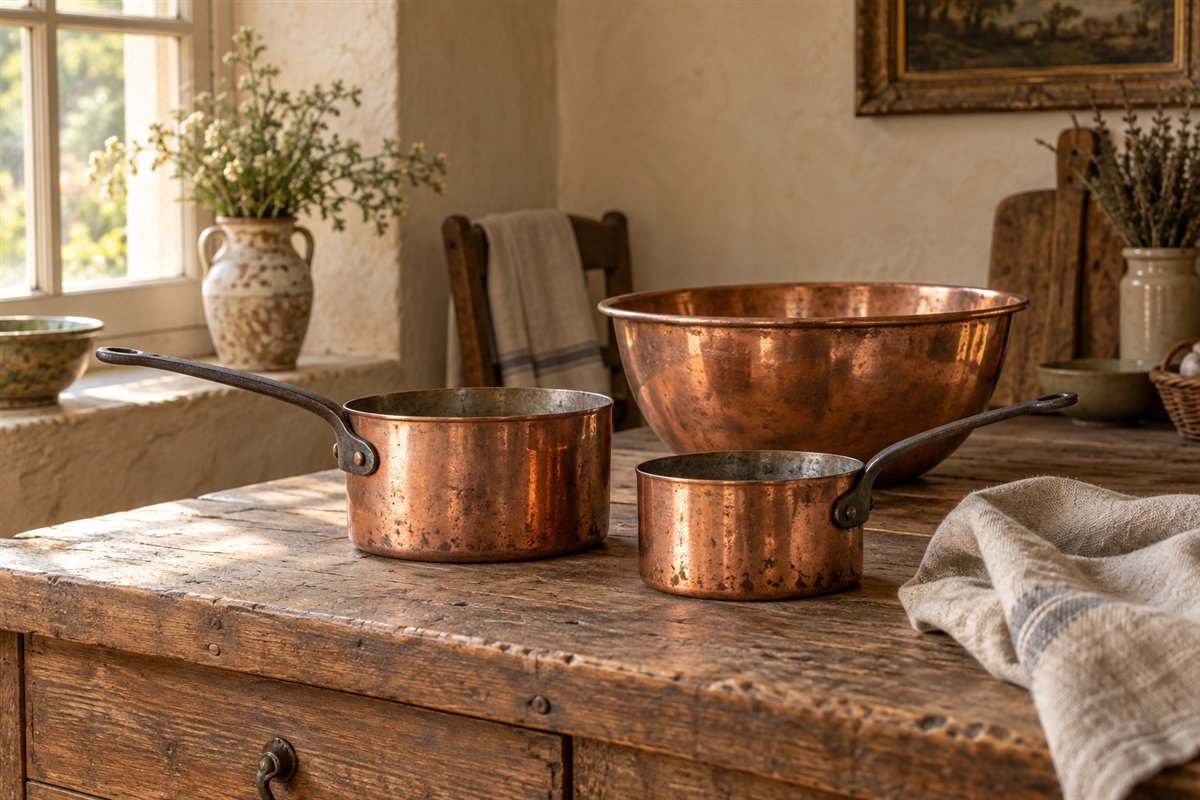
French copper cookware: antique copper pans & saucepans
Start inside the pan when comparing French copper cookware. Antique copper pans need an individual assessment of their lining and repairs. French copper saucepans may look similar from the outside, but their lining, handles and condition determine how they can be used.
Ask for a clear view of the whole interior, close-ups of wear and a description of the lining. Confirm dimensions, weight and the stability of the base. A decorative vintage pan should remain decorative unless a suitable professional confirms that it is fit for cooking.
French copper pots: jam basins & cauldrons
French copper pots range from compact saucepans to broad jam basins. For a larger vessel, confirm the capacity, handle stability and intended use before choosing.
Confirm the intended use before purchase. Unlined copper is not a universal cooking surface, and a vintage vessel’s previous use may be unknown. Check handles, rivets and any repairs; condition must be assessed for the specific task rather than inferred from appearance.
Vintage copper bowls for a French kitchen
A copper bowl can be a working tool or a sculptural piece of French kitchenware. Check its lining, rim and condition, and keep decorative appeal separate from verified food suitability.
Ask whether the bowl is lined, coated or intended only for decoration. Check for splits, unstable repairs and corrosion. Lo Cantou’s approach is to describe what can be observed, and separate a decorative appeal from a verified functional use.
French kitchenware: vintage pastry molds
Fluting, relief and compact shapes make old pastry molds compelling even away from the kitchen. A small group can create a rhythm on a shelf.
Examine the inside, joints and hanging points. Older molds may have wear that is difficult to see in a single photograph. If food suitability cannot be established, use them for display rather than baking.
What to check before choosing copper
Request interior photographs, the stated lining, capacity and weight. Ask about repairs, the stability of handles and whether any assessment of cooking suitability is documented.
Explore our approach to provenance, then read how Lo Cantou plans packing and delivery to the US.
Further reading: Mauviel use and care guidance.
Copper: buying & care questions
Why do some French copper pans have iron handles?
Handle materials and shapes vary by maker and intended use. An iron handle is a construction detail, not proof of age or origin. Check the security of its rivets as well as its appearance.
Is vintage copper cookware safe to cook with?
It depends on the specific pan, lining and condition. Have uncertain or worn interiors assessed before cooking. Mauviel notes that tin-lined cookware may need retinning as part of its working life; a vintage appearance does not establish food suitability.
What does retinning cost?
Request a quote from a specialist using the pan’s dimensions, photographs and condition. Size, repairs and the service required affect the price. Include the likely restoration cost when comparing an unrestored piece with one ready for use.
Comparing kitchen materials? Read the vintage cast iron pot buying guide.
Follow your curiosity
Keep exploring.
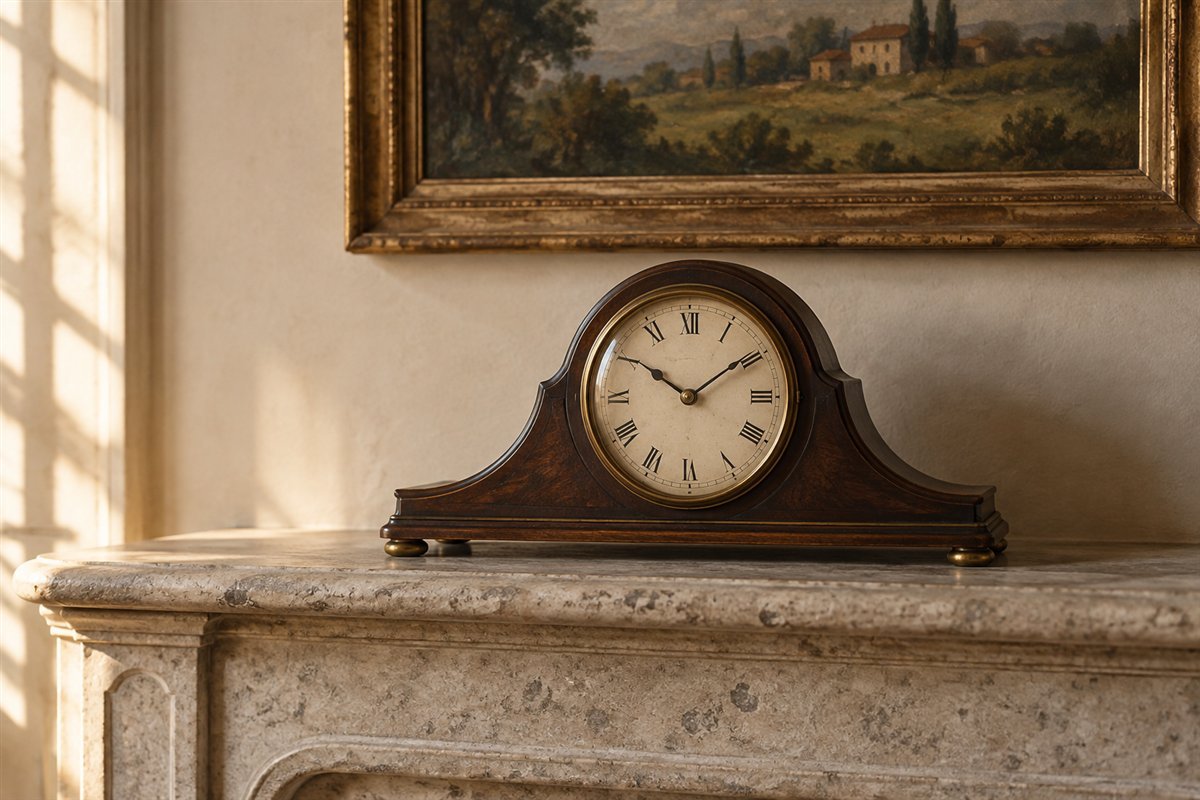
Clocks
Mantel clocks & barometers
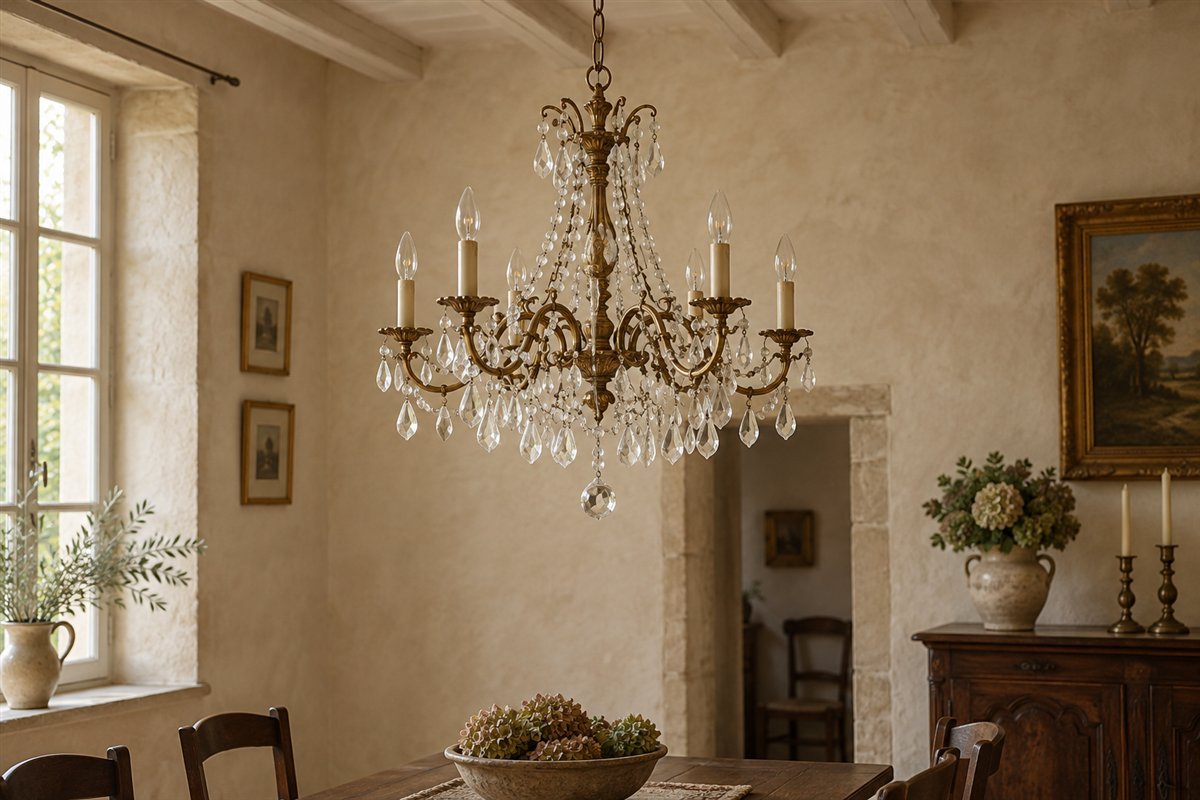
Lighting
Chandeliers, sconces & lanterns
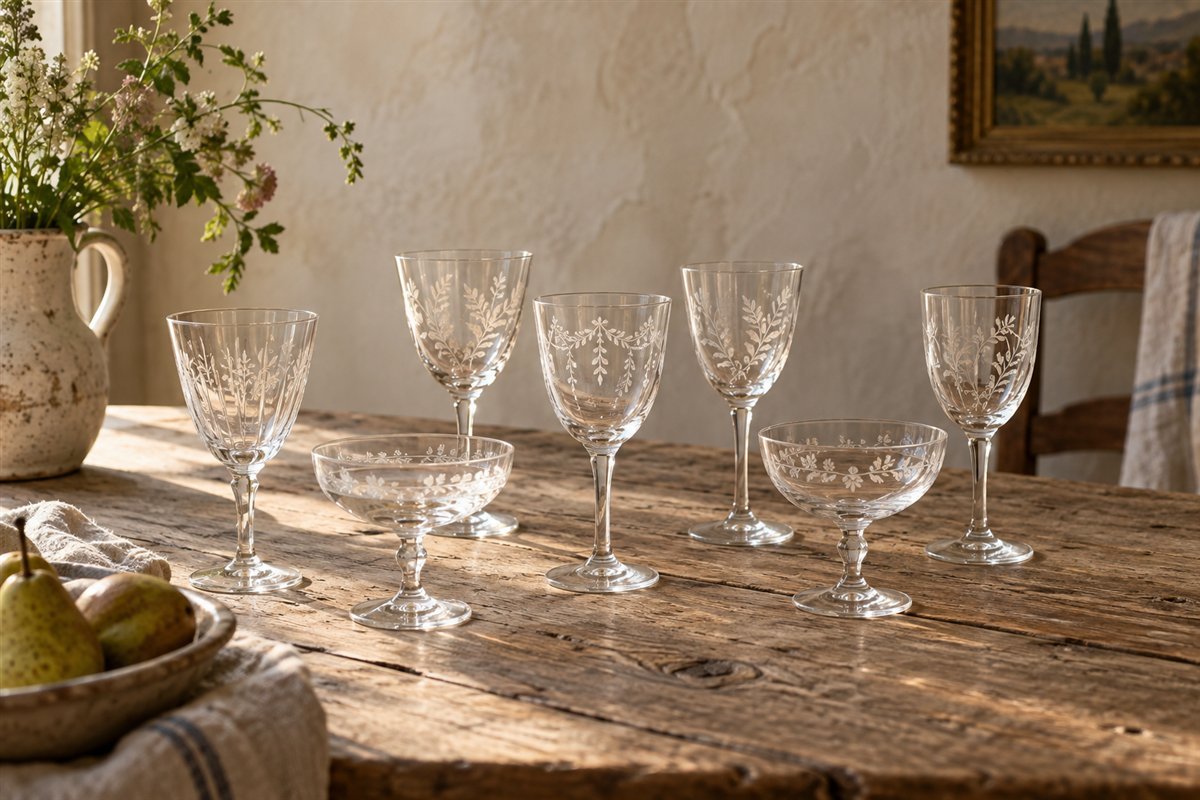
Glassware
Etched glasses, coupes & carafes
AI-created collection illustrations.