A closer look · Updated 30 September 2026
Vintage silverplate flatware: build an accurate set inventory
List utensil types instead of relying on a piece count
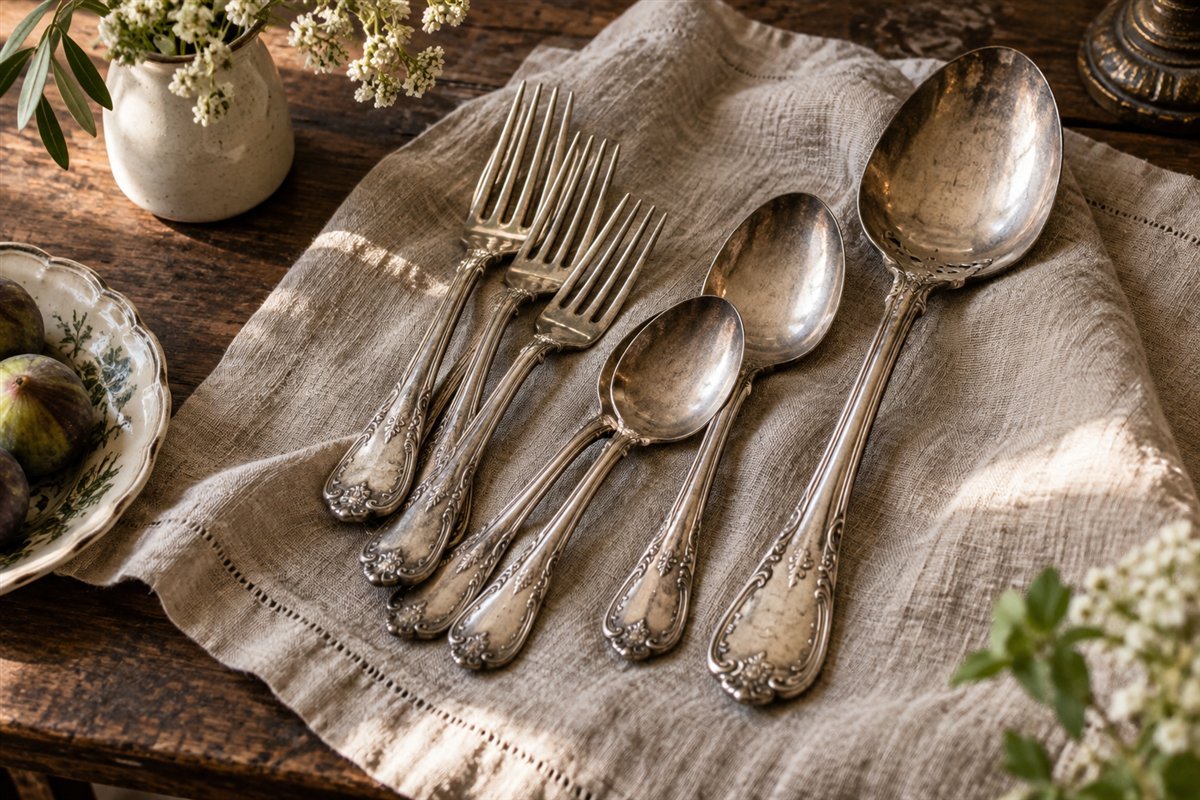
Record how many dinner forks, smaller forks, spoons, knives and serving utensils are actually included. Measure the length of each type and photograph the full pattern. A box advertised as a complete service may suit a different meal format from the one you intend to use.
Check marks across the set rather than on a single spoon. Replacements can share a similar pattern while differing in maker, dimensions or period. Note those differences explicitly before deciding whether you want an exact set or a visually compatible group.
Inspect wear and prepare a missing-piece enquiry
Ask for close-ups of working surfaces, fork backs, spoon bowls, knife blades and handle joints. Distinguish tarnish from plating loss or repairs. A fitted case protects and presents the pieces but does not, by itself, establish their maker or date.
If a piece is missing, photograph a matching example beside a ruler and include all marks. Explain whether an approximate match is acceptable. Use care guidance appropriate to the actual maker, age and construction rather than assuming every silver-plated knife tolerates the same cleaning method.