The collection · 05
Antique Apothecary Jars & French Opaline Glass
Antique apothecary jars and French opaline glass bring color and sculptural shape to a shelf. Lo Cantou explores these vessels alongside confit pots and vintage stoneware crocks.
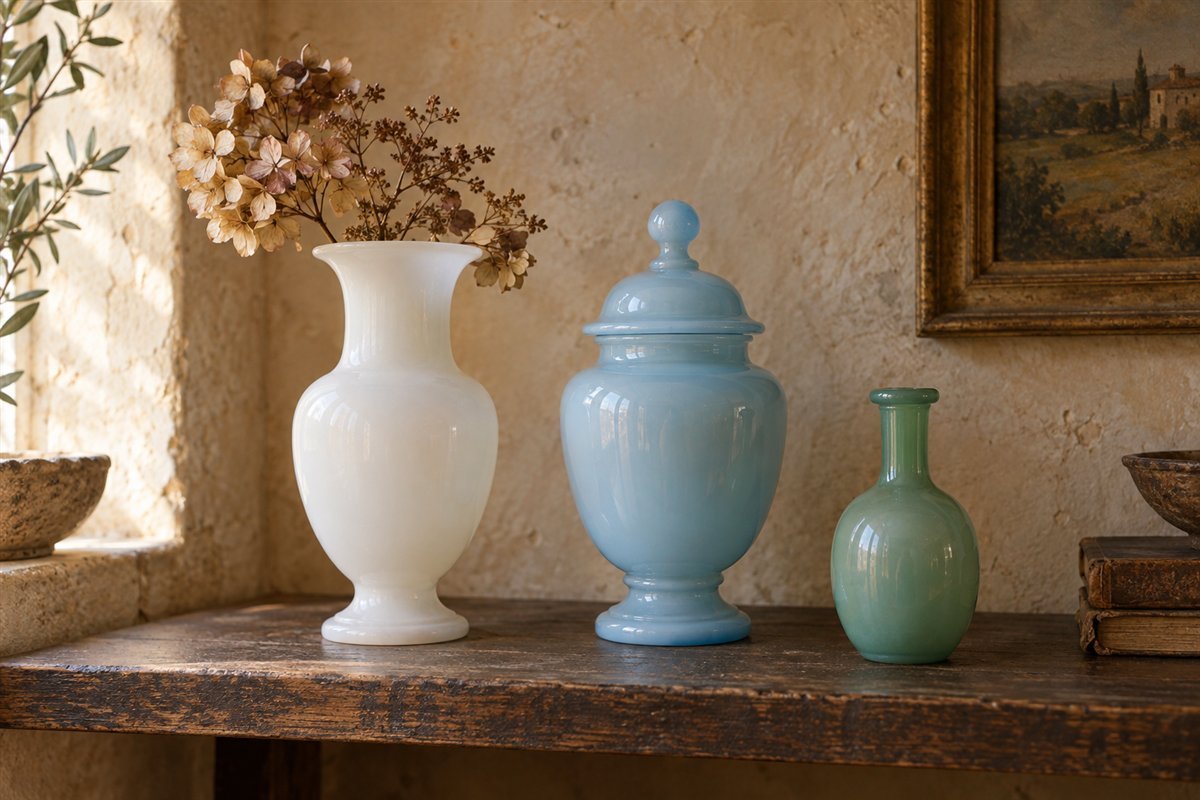
White opaline glass vase & colored opaline
A white opaline glass vase can soften a grouping of stronger colors. Opaline’s milky appearance is part of its appeal; daylight photographs help you judge the actual tone of a piece.
Ask for photographs in even daylight, including the rim and base. Strong artificial lighting can alter the apparent color. Chips, losses to gilding and replacements should be described individually. Color alone cannot reliably establish a maker, age or place of manufacture.
Antique apothecary jars: lids, labels & glass
Antique apothecary jars reward a close look at their lids and lettering. When comparing vintage apothecary jars or blue glass apothecary jars, check whether the lid belongs to the vessel.
A lid may be a later replacement even when the colors are close. Check edges, inner rims and the underside. Vintage jars with unknown previous contents are best considered decorative; do not assume they are suitable for storing food, medicines or cosmetics.
French confit pot: shape, glaze & condition
A French confit pot brings together a rounded body, simple handles and a rich glaze. Think about its proportions and condition before choosing it for a shelf or a floral display.
Examine the handles and base for repair, and ask whether the vessel holds water if you plan to use it as a vase. General wear can inform an assessment, but it cannot supply an exact date on its own.
Vintage stoneware crocks
Vintage stoneware crocks offer substantial forms and understated glazes. An antique stoneware crock should be described by its dimensions, condition and documented origin, not just its rustic appearance.
Confirm weight and dimensions, especially for a shelf. Review photographs of any cracks or repaired handles. For plants or flowers, a separate liner helps protect both the piece and the furniture beneath it.
What to check before choosing opaline & jars
Confirm the vessel’s height, base width and lid fit. Ask about chips, repaired handles and known previous contents; attractive color does not establish origin or suitability for storage.
Explore our approach to provenance, then read how Lo Cantou plans packing and delivery to the US.
Opaline & jars: buying & care questions
What is French opaline glass?
The term is commonly used for glass with a milky or opaque appearance, in white and a range of colors. A confident French attribution needs evidence beyond the color of the glass.
What were apothecary jars used for?
They were associated with the storage and display of pharmacy preparations and ingredients. Surviving jars may also be later decorative pieces, so examine the object and its history rather than relying on its label alone.
How do I date a confit pot?
Consider form, material, glaze and any documented history together. A useful description explains the evidence behind an approximate period and acknowledges what is unknown.
For arranging flowers in a bowl, see how to choose a vintage glass flower frog.
Follow your curiosity
Keep exploring.
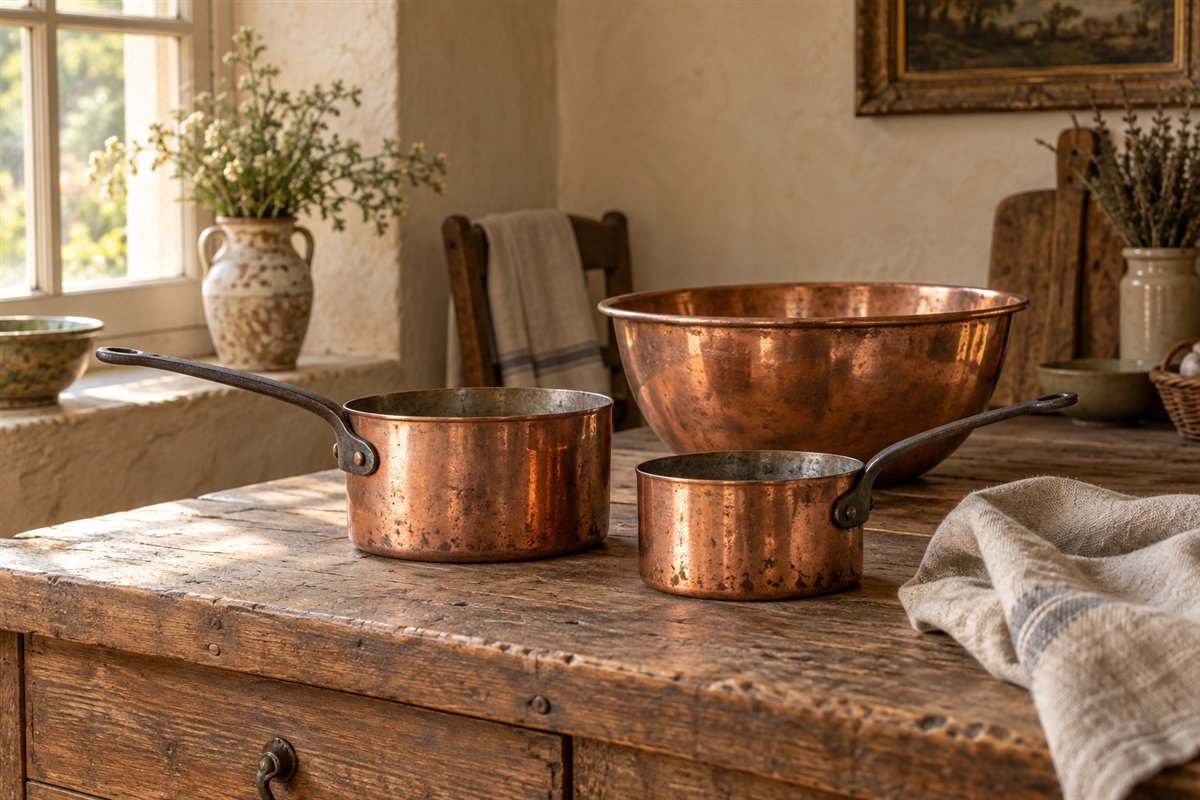
Copper
Pans, bowls & pastry molds
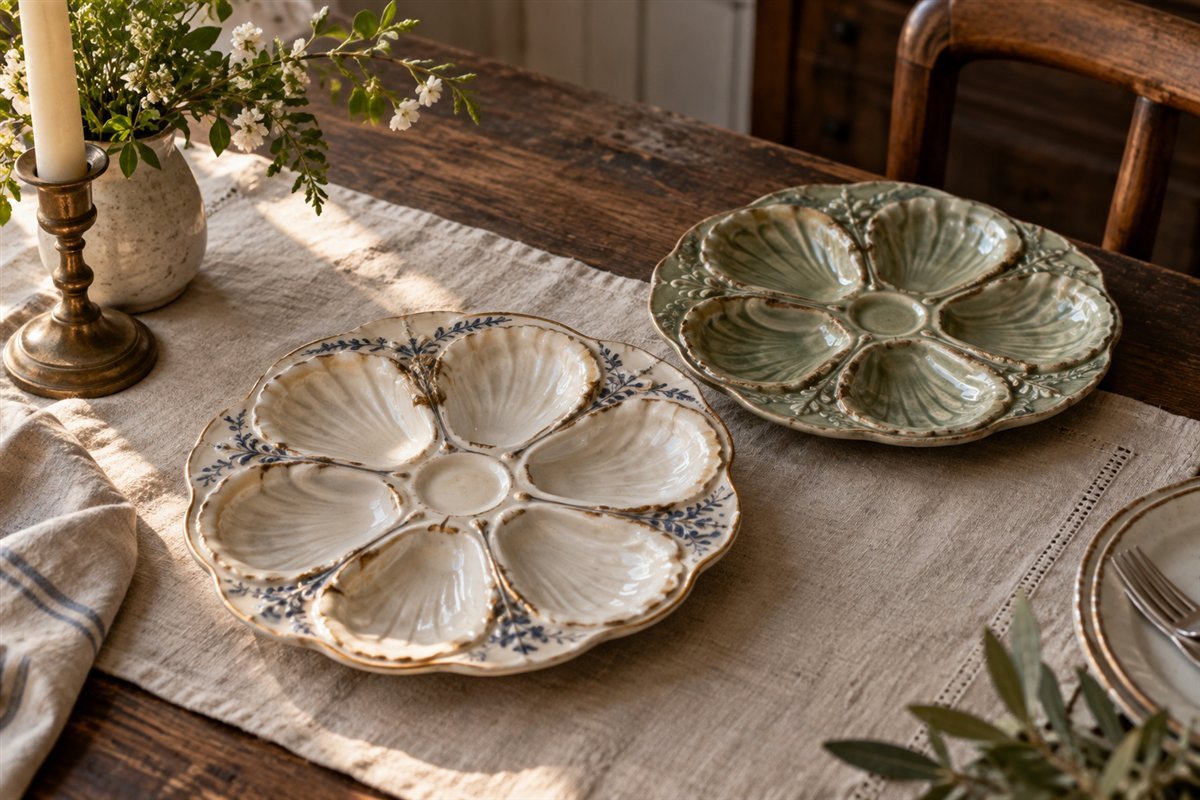
Oyster plates
Limoges porcelain & French faience
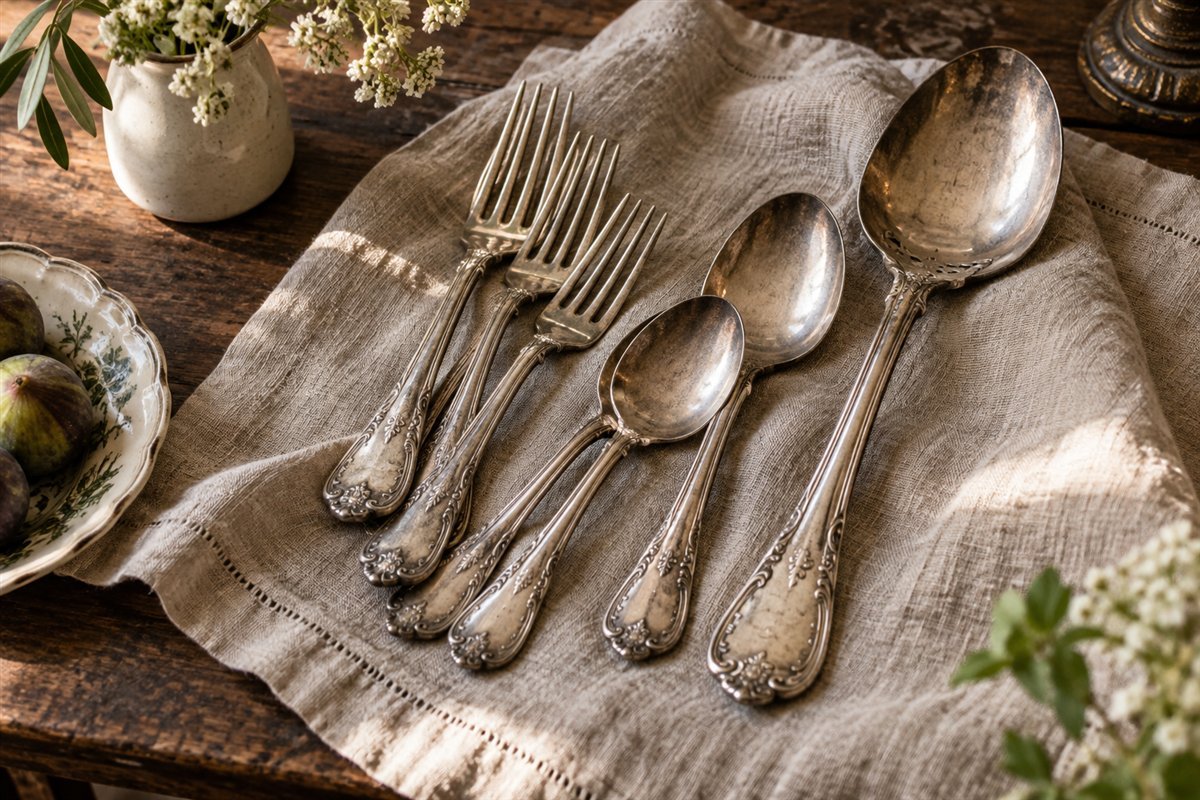
Silverware
Silver-plated sets & serving pieces
AI-created collection illustrations.