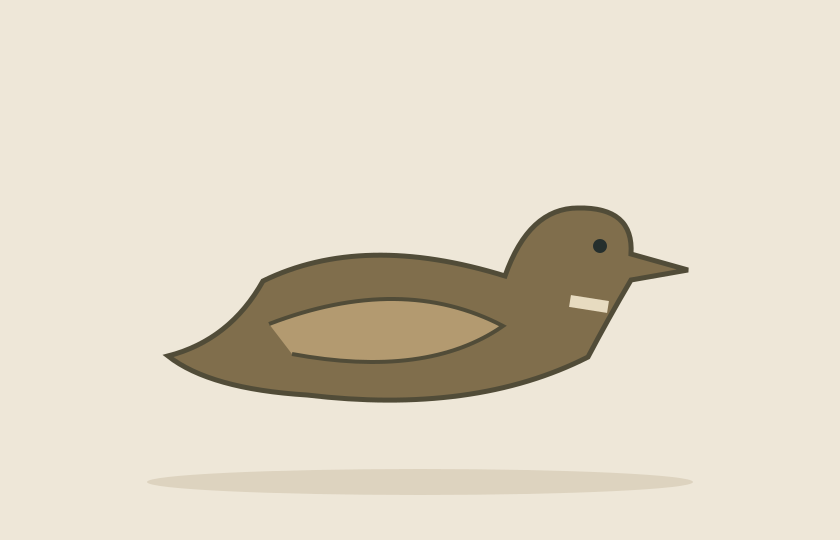
Working decoy or decorative bird?
Ask whether the object is described as a hunting decoy, a later decorative carving or a miniature. Look at the underside, attachment points and any surviving weights or fittings. Missing equipment does not settle the question, and added fittings do not automatically prove working use.
Museum collections provide useful context. Shelburne Museum holds historic wildfowl decoys, while Colonial Williamsburg documents a painted cast-iron duck decoy. Do not assume that every genuine older example must be carved from one solid block of wood.
Why does the paint history matter?
Record whether the seller describes the paint as original, old working repaint or modern restoration. These are materially different statements. A decoy could have been maintained during its working life; later repainting may also obscure earlier surfaces and identifying details.
Request even-light photographs of the head, body, underside and damaged areas. Do not strip varnish, scrub the paint or add an aged finish to make the object more appealing. If the surface is uncertain or unstable, consult a conservator before treatment.
Assess maker claims and repairs
A carved signature, branded name or label is evidence to investigate, not a complete authentication. Compare it with published references and the object’s construction. Shelburne’s research into historical attributions illustrates why names attached to decoys can change as documentary evidence improves.
Look for replaced heads, repaired necks, splits and missing bill tips. Ask how components are attached and which repairs are documented. An attractive profile can remain appealing after restoration, but the description and price comparison should account for it.
Display and compare without inventing a valuation
Choose a secure surface that supports the object without pressure on fragile paint or projecting parts. Avoid lifting by the head or bill. A low shelf can show the silhouette while keeping it away from an exposed edge where it might be knocked over.
There is no useful universal price for an antique duck decoy. Compare documented maker, type, material, surface history and condition with genuinely comparable examples. This guide concerns collecting and decorative display; it does not represent a claim that a particular maker’s work is currently available from Lo Cantou.
Questions before buying
Are all antique duck decoys wooden?
No. Historic examples also exist in other materials, including cast iron.
Should I repaint a worn decoy?
Do not treat repainting as routine improvement. Establish the significance and condition of the existing surface before any intervention.
Sources & further reading
Continue exploring
- French country decor with vintage character
- Mid century art: choosing French works for your home
- Vintage Object Provenance, Marks & Condition
Contact Lo Cantou with your object enquiry. Include photographs, measurements and the question you want to resolve.