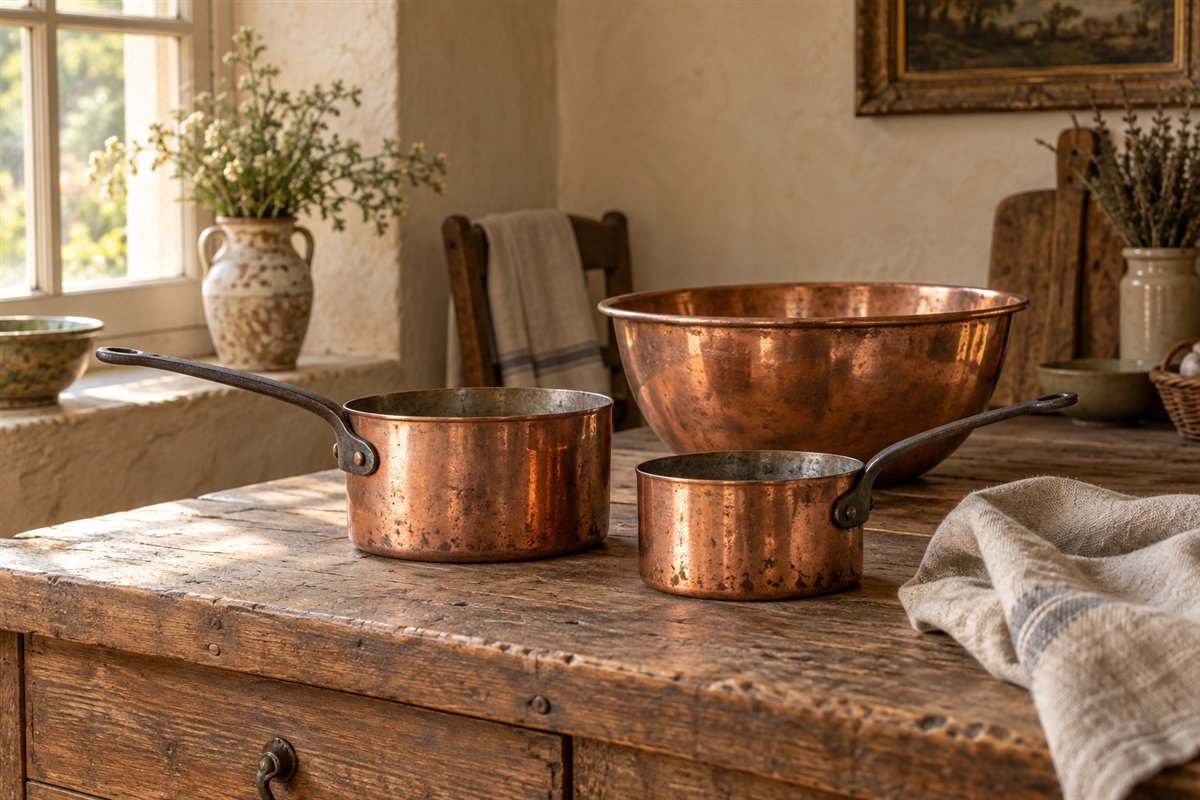
French country kitchen decor: start with the working area
Identify where you prepare food, wash up and serve meals before adding decoration. Keep the space beside the cooker clear enough to work safely. Group a few frequently used utensils close to their task, leaving purely decorative pieces out of splash and heat zones.
A wooden table or freestanding cupboard can soften fitted cabinetry, provided doors open fully and circulation remains comfortable. Measure drawers, chair movement and appliance doors as part of the layout rather than judging a piece from its photograph.
Copper cookware: cooking piece or wall display?
The outside of a copper pan tells only part of its story. Ask about its interior lining, repairs and suitability for the proposed heat source. Decorative condition and cooking condition need separate assessments; a bright exterior does not establish that an old pan is ready for food preparation.
For wall display, compare the total weight with the fixing system and leave room between handles. For cooking, follow the maker’s instructions or obtain an assessment where the material and lining are uncertain. Our copper cookware page explains what photographs and measurements to request.
Pottery, confit pots and French country shelves
Vary height while repeating a material: one taller jar, a lower bowl and a small stack of plates can be enough. Keep heavy vessels on a surface designed to support them. Leave access for cleaning rather than filling every part of a shelf.
A vessel described as a confit pot, olive jar or stoneware crock may have a different history and construction. Check the base, glaze, handles and any repairs. Unknown previous contents or an uncertain glaze are reasons to keep a piece decorative until its intended use is established.
Bring the kitchen and table together
Carry one color or texture from the shelves to the table. Blue faience, plain glassware and linen can work without matching patterns. Choose serving pieces by size and function: a cheese knife, bread plate and water carafe should be comfortable to use as well as attractive.
Start with a small arrangement you can move easily when cooking. If a collection is incomplete, record the pattern and dimensions before seeking another piece. Lo Cantou’s missing-piece service explains how to prepare a useful reference request.