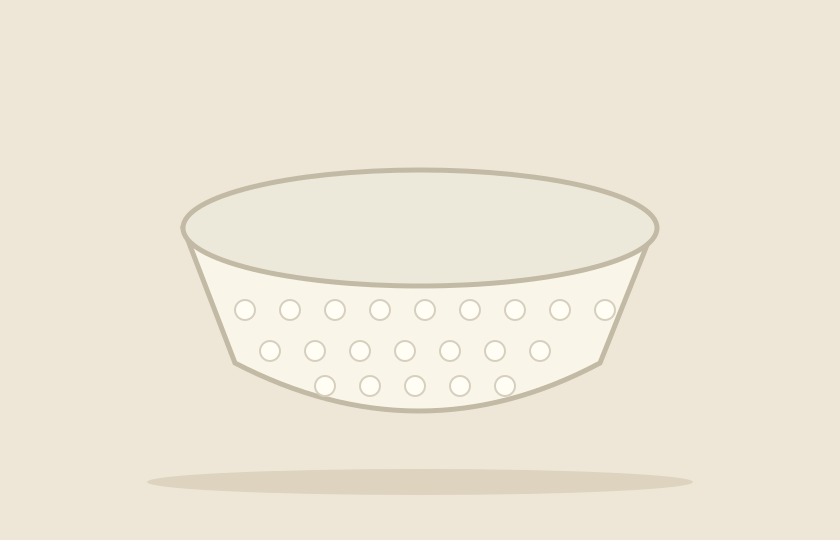
Hobnail describes a surface pattern
The raised bumps give hobnail glass its distinctive texture. Milk glass describes the opaque appearance, while hobnail refers to decoration; they are not interchangeable terms. A white bowl can have a different pattern, and hobnail decoration can appear on glass that is not opaque white.
The Metropolitan Museum of Art catalogues a pressed-glass hobnail bowl as probably British. That provides useful context against assuming the pattern alone identifies one particular American maker. Research the complete form rather than attributing every bumpy white bowl to Fenton.
Record the rim, foot and underside
Photograph the bowl from above, from the side and underneath. Include the full rim profile, any foot, molded seams and marks. Record diameter and height, and distinguish the maximum width from the opening if the rim turns inward.
For a ruffled or crimped rim, compare the arrangement of the folds as well as the body shape. A missing label does not by itself prove age; an attached label also needs to be considered alongside the object. Use reliable maker references when a specific attribution is proposed.
Condition: inspect the raised details
Ask for close-ups of the rim tips, raised decoration and foot edge, where small chips can be difficult to see in photographs. Separate manufacturing features from later damage only when the evidence supports that distinction. Request disclosure of cracks, repairs and staining.
Strong white highlights can hide defects. Neutral light and several angles are more useful than one bright overhead image. If the bowl is intended for food service, establish that use separately from its decorative interest and maker attribution.
Choose a useful role in a collected interior
An opaque white bowl can give a quiet contrast to blue faience, wood or clear glass. Check its footprint against the shelf or table, and leave enough room to lift it safely. A decorative display need not depend on a rare-maker claim.
Avoid abrupt temperature changes or untested cleaning treatments on uncertain antique glass. Ask how projecting rims and feet will be protected during shipment. Keep photographs and measurements with your records so a later comparison is based on the actual piece rather than a generic pattern name.
Questions before buying
Does hobnail always mean Fenton?
No. Pattern alone is insufficient to establish a maker.
Is milk glass the same as porcelain?
No. Milk glass is glass with an opaque appearance; porcelain is a ceramic material.
Sources & further reading
Continue exploring
- Antique canning jars, apothecary jars and French vessels
- Vintage plates: French faience, majolica and tableware
- Antique glass candle holders: check the rim, stem and base
- Vintage Object Provenance, Marks & Condition
Contact Lo Cantou with your object enquiry. Include photographs, measurements and the question you want to resolve.