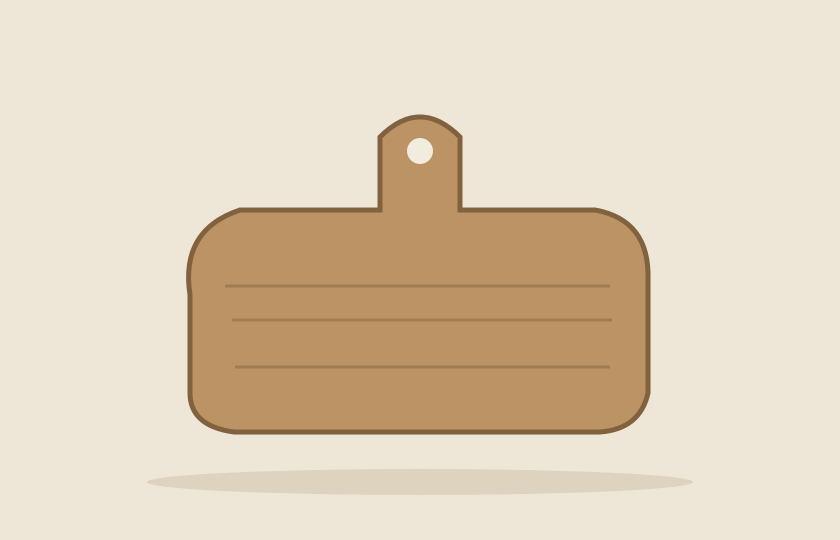
Round bread board, rectangular board or baker’s peel?
Shape changes how an object sits in a room. A round board works behind a group of bowls; a rectangular board can fit a narrow shelf; a long-handled peel needs substantially more height. A handle or circular form alone does not prove that a board came from a bakery or from France.
Measure the usable surface separately from the overall length. Check the handle opening, the board’s thickness and whether it stands flat. Ask what supports the stated origin, especially when the description relies on a picturesque regional story rather than a mark or documented history.
How do you examine an antique wooden board?
Request photographs of both faces, the edge and the handle. Look for splits, loose joins, warping, repairs and any surface coating. Describe each finding separately: shallow knife marks, a deep open crack and a glued handle have different implications for use and handling.
An aged appearance is not a date. New boards may be distressed, while older boards may have been sanded or refinished. Ask which changes are known. Do not sand away the surface to investigate it: doing so removes evidence and may change the appearance that attracted you in the first place.
Display board or serving board?
Treat intended food use as a separate question from age and beauty. Establish the wood, finish, previous use and condition before placing food directly on an old board. A decorative purchase should not be presented as food-ready simply because it resembles modern kitchen equipment.
When that history is uncertain, display the board and use suitable contemporary tableware for serving. If you want a functional board, request an explicit condition and suitability account from the seller. A sheet of paper or a superficial wipe does not resolve an unknown coating, repair or contamination history.
Style a small group without hiding the details
Let the board provide a warm background rather than covering it with a dense arrangement. A low bowl and one taller vessel leave its outline visible. Place heavy boards on a secure surface and support any board displayed upright so it cannot slide onto glassware or work areas.
Compare offers using overall dimensions, condition, documented attribution and delivery cost. For a large board, ask how the handle and broad surface will be supported during packing. A visually appealing board may be a good decorative choice without being the rare or valuable example implied by a sales description.
Questions before buying
Do knife marks prove a bread board is antique?
No. Wear needs to be assessed alongside construction and documented history.
Can I use every old bread board for food?
No. Materials, finish, previous use and condition need to support that use; uncertain pieces are better kept decorative.
Continue exploring
- French kitchenware: choose useful objects with clear histories
- A French country kitchen built around useful objects
- Choosing a cheese knife and vintage serving pieces
- Vintage Object Provenance, Marks & Condition
Contact Lo Cantou with your object enquiry. Include photographs, measurements and the question you want to resolve.