French manufacture, French style or found in France?
Keep these descriptions separate. An object can be bought in France without having been made there. A regional appearance or familiar kitchen shape can suggest avenues of research, but it should not replace a mark, reliable reference or documented history.
Record the maker attribution exactly as presented and ask what supports it. Photograph the whole object and every visible mark. If the evidence is incomplete, an honest description of the material and form is more useful than a confident but unsupported regional story.
Copper pans: assess the interior before cooking
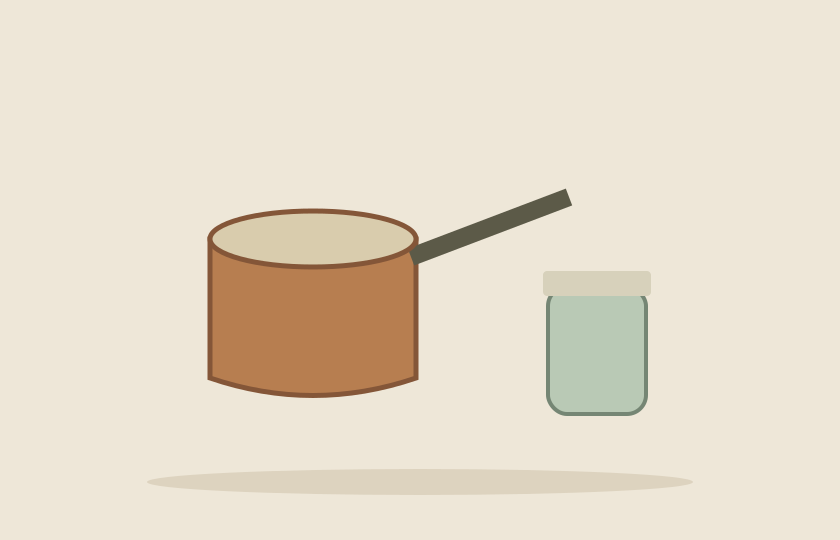
For a saucepan, request interior photographs, capacity, dimensions, lining information and the condition of the handles. Cooking suitability is a different question from the beauty of the exterior. Unknown repairs and worn or uncertain lining need appropriate assessment.
Current maker instructions can explain particular constructions, but should not be applied automatically to an unidentified vintage pan. The copper guide provides a more detailed enquiry checklist and points to Mauviel’s published guidance for its cookware.
Bread boards, jars and storage pieces
On a wooden board, establish the finish, repairs and prior use before treating it as food-ready. On a jar, identify the body, lid, opening and sealing system separately. A decorative older vessel is not automatically suitable for current food storage or preserving methods.
Use the detailed board and jar guides to prepare photographs and measurements. If intended use remains uncertain, choose display rather than inventing a functional claim. A collection can be visually coherent while containing objects with very different practical limitations.
Serving tools and missing pieces
For knives and silver-plated utensils, check each working surface, handle joint and complete mark. A similar pattern does not guarantee the same size or maker. Compare the actual pieces that will be used together rather than relying on a single representative photograph.
To seek a replacement, record overall length, pattern details, marks and whether an exact match is essential. Lo Cantou’s missing-piece page explains how to frame a request. For arranging shelves and bringing objects into the room, use the separate French country kitchen guide: that article addresses decoration rather than this buying checklist.
Questions before buying
Does kitchenware bought in France count as French-made?
Not necessarily. Place of purchase and manufacture are different facts.
Should I choose a kitchen collection by matching color?
Color can help a display, but function, condition and material determine whether each piece suits its intended use.
Continue exploring
- French copper cookware: antique pans, pots and saucepans
- Antique bread boards: choose for character and use
- Antique canning jars, apothecary jars and French vessels
- Choosing a cheese knife and vintage serving pieces
- A French country kitchen built around useful objects
- One piece missing. A table worth completing.
Contact Lo Cantou with your object enquiry. Include photographs, measurements and the question you want to resolve.